Operational Resilience in the EU: Why Cyber Risk Monitoring Is Now a Board Level Imperative
For years, cybersecurity in most organizations sat comfortably within IT. That model no longer holds.
Across the European Union, regulators are forcing a structural shift: cyber risk is now a business continuity risk and boards are directly accountable for it. Frameworks like DORA and the NIS2 Directive are not asking whether controls exist. They are asking a harder question:
Can your organization continue to operate during a cyber disruption without regulatory failure?
That distinction is what’s pushing cyber risk monitoring into the boardroom.
From Security Controls to Operational Survival
The EU’s regulatory direction is clear. Cybersecurity is no longer about perimeter defense or periodic audits, it is about operational resilience.
The Digital Operational Resilience Act (DORA) requires financial entities to continuously monitor ICT risks and demonstrate resilience under disruption scenarios. The NIS2 Directive expands accountability across sectors such as healthcare, infrastructure, and digital services, explicitly linking cybersecurity to operational continuity. At the same time, guidance from ENISA reinforces the need for continuous risk management rather than point-in-time compliance.
The implication is simple but critical: a compliant organization that cannot withstand disruption is still a regulatory risk.
Why the Board Is Now Accountable
This is not just a regulatory update, it's a governance shift.
Cyber incidents now directly impact revenue, operations, and customer trust, making them material business risks. EU regulations increasingly require leadership teams to take ownership of cyber risk governance, not just delegate it to IT.
However, most boards are still working with limited visibility. They rely on static reports, periodic audit summaries, and fragmented updates from different teams. This creates a lag between risk emergence and executive awareness.
What leadership actually needs is continuous, real-time visibility into cyber risk posture something traditional compliance approaches were never designed to deliver.
The Hidden Problem: Fragmented Cyber Risk Monitoring
Despite rising expectations, many organizations still rely on disconnected systems and manual processes to manage cyber risk.
• Risk registers maintained in spreadsheets
• Evidence scattered across tools and folders
• Limited visibility between audit cycles
• Duplicate controls across frameworks like GDPR, ISO 27001, and NIS2
This creates a dangerous illusion of control. Between audits, control effectiveness is assumed rather than verified. When leadership asks for a clear risk picture, teams often scramble to assemble it.
Operational resilience requires something fundamentally different: a system where controls, risks, and evidence are continuously connected not manually stitched together.
What Continuous Cyber Risk Monitoring Looks Like
Leading organizations are shifting toward a control-centric model where cybersecurity is managed as an ongoing operational function.
Instead of treating each framework separately, they structure their programs around shared controls that are monitored continuously. Evidence is pulled directly from operational systems rather than collected manually, and compliance status is tracked in real time.
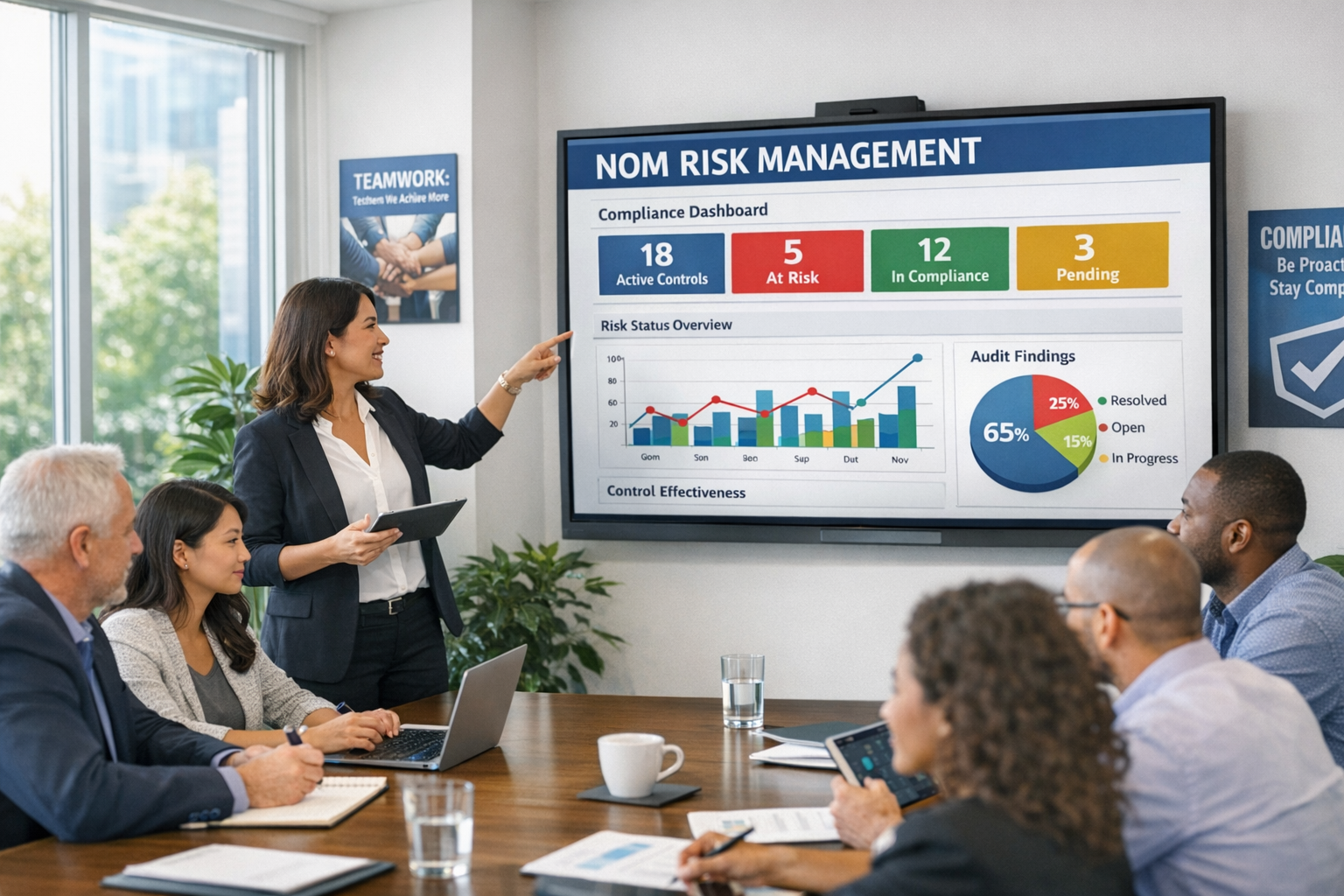
This changes how cyber risk is communicated at the leadership level. Instead of retrospective updates, boards gain a live view of exposure, control effectiveness, and readiness. Cybersecurity becomes measurable, trackable, and aligned with business risk, not just a technical function.
Where Most Organizations Fall Short
The challenge is not understanding the need for continuous monitoring, it is implementing it effectively.
• Compliance data is spread across multiple systems
• Evidence collection remains manual and inconsistent
• Controls are not standardized across frameworks
• There is no single source of truth for risk and compliance
Without a unified structure, organizations remain reactive. This is precisely the gap EU regulators are trying to close.
Turning Compliance Into a Resilience Engine
To meet evolving regulatory expectations, organizations need to rethink how compliance and risk management operate.
Quantarra’s platform is designed to unify these functions into a continuous system. Instead of managing compliance, risk, and audits separately, it connects them through a single architecture.
Organizations can map controls once across frameworks such as GDPR, ISO 27001, SOC 2, and NIS2, automate evidence collection through integrations, and maintain a real-time view of their cybersecurity posture. With an immutable audit trail and centralized dashboards, both operational teams and leadership gain full visibility into risk and readiness.
The result is not just improved audit efficiency it is continuous operational resilience aligned with regulatory expectations.
The Bottom Line
Operational resilience is no longer a future goal in the EU; it is an enforced requirement.
Organizations that continue to treat cybersecurity as a periodic compliance task will struggle to keep up. Those that succeed will shift to a continuous model where cyber risk monitoring is embedded into daily operations.
Because in 2026, resilience is not proven during an audit. It is demonstrated every day.