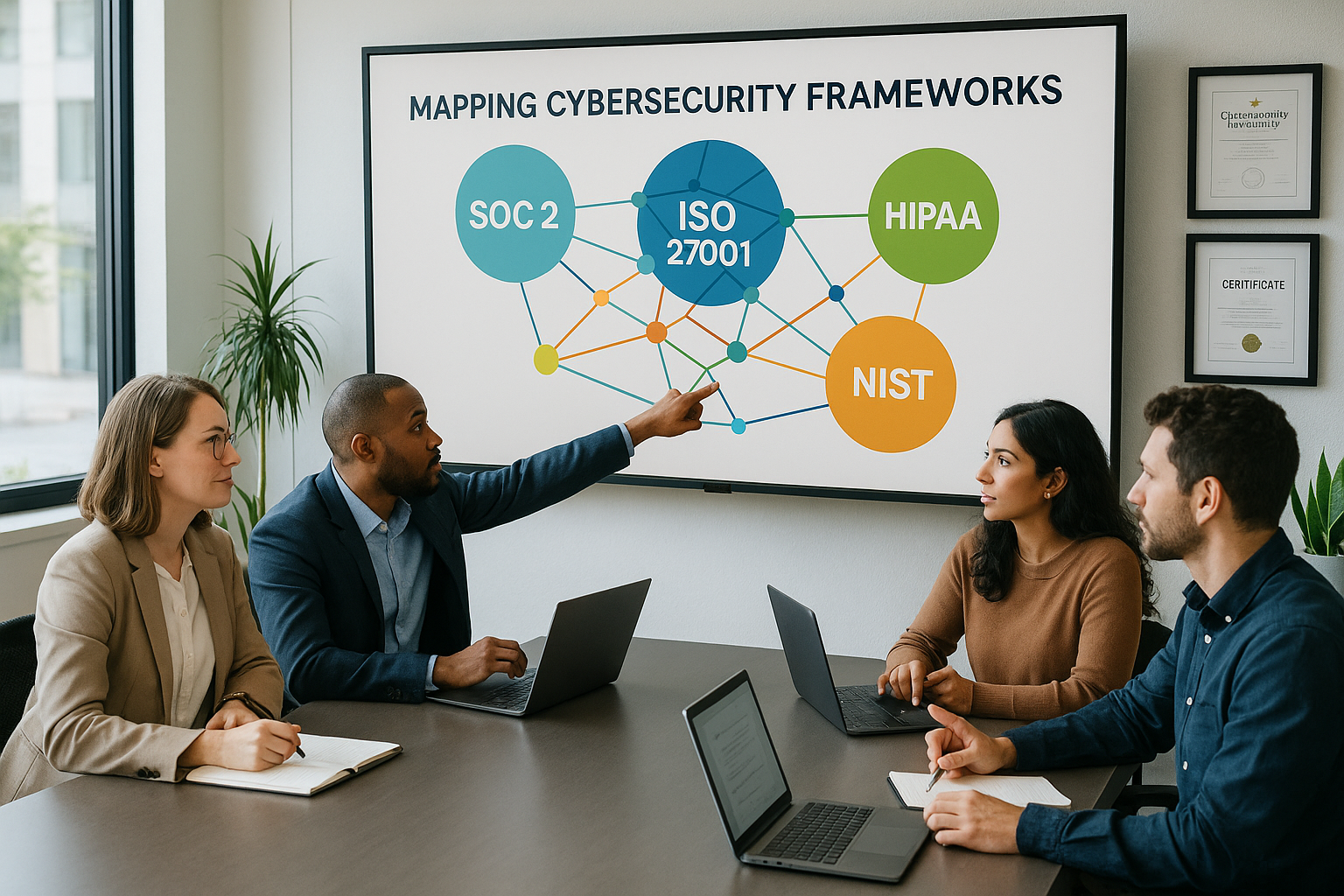
The 80% Overlap: Automating ISO 27001 and SOC 2 Simultaneously
How growing companies can avoid duplicate audits by building one compliance system for both frameworks
For fast-growing SaaS companies, the compliance roadmap often starts with SOC 2 and quickly expands to ISO 27001. SOC 2 helps close enterprise deals in the US, while ISO 27001 becomes important for global expansion and enterprise procurement.
The problem is that many teams treat them as separate projects. They run separate audits, collect duplicate evidence, and assign teams the same control tasks twice. In reality, there is significant overlap between both frameworks. Many organizations can streamline compliance by using one operational model for both. Companies looking to simplify this process can explore structured approaches at quantarra.
Why There Is a Significant Overlap
Both frameworks are built around core security principles such as access management, risk assessments, incident response, vendor management, and data protection.
SOC 2 is based on the AICPA Trust Services Criteria, while ISO 27001 focuses on building an Information Security Management System. The frameworks are structured differently, but many underlying controls are similar.
This is why companies often discover they are repeatedly collecting the same screenshots, policies, logs, and approvals for both certifications.
Where Teams Usually Waste Time
Instead of creating one control layer, teams often duplicate operational work.
They maintain separate policy documents for each framework. Engineering teams repeatedly provide the same access logs. HR teams complete duplicate onboarding evidence requests. Security teams manually map controls during every audit cycle.
- Separate evidence folders for each framework
- Repeated access review documentation
- Duplicate vendor risk assessments
- Manual spreadsheet tracking across teams
This is where compliance fatigue starts.
What the 80 Percent Overlap Actually Looks Like
A company implementing strong access controls for ISO 27001 can often use the same evidence for SOC 2. The same applies to incident response workflows, employee security training, asset inventories, and vendor management documentation.
Risk assessments may require different formatting, but the operational work behind them remains largely similar.
The real challenge is not meeting both frameworks. It is organizing controls in a way that allows reuse.
Move from Framework-Based Compliance to Control-Based Compliance
High-growth companies are shifting toward a control-based model instead of a framework-based model.
- Build one control library
- Map controls across multiple frameworks
- Collect evidence once
- Reuse audit trails across certifications
This significantly reduces duplicated effort and aligns with how scaling companies manage operational efficiency.
Why Manual Systems Break at Scale
Spreadsheets may work when managing one framework. They fail quickly when companies add a second or third certification requirement.
Teams lose visibility into ownership. Evidence becomes outdated. Audit preparation turns into a last-minute scramble across departments.
This becomes even more difficult when organizations add HIPAA, GDPR, NIS2, or CyFun requirements later.
A scalable compliance program needs continuous visibility rather than periodic documentation exercises.
How Quantarra Helps Teams Automate Both Frameworks
Quantarra helps companies manage ISO 27001 and SOC 2 through a unified compliance model. Instead of handling each framework separately, teams can map one control to multiple frameworks and reuse evidence automatically.
With 300-plus integrations, evidence collection becomes automated. A centralized dashboard helps teams monitor readiness in real time.
Quantarra also enables external auditors to work from the same immutable audit ledger, reducing fieldwork timelines and eliminating repeated back and forth requests.
This directly aligns with Quantarra’s playbook of helping startups and SMBs reduce manual audit effort while scaling across multiple frameworks.
The Bottom Line
The biggest mistake companies make is assuming ISO 27001 and SOC 2 require completely separate programs.
They do not.
If nearly 80 percent of your controls overlap, your compliance process should reflect that. Build once, reuse intelligently, and stop making your teams repeat the same work twice.
Build Once. Scale Faster.
If your business is preparing for both ISO 27001 and SOC 2, now is the time to eliminate duplicate compliance work.
Visit quantarra.io to see how teams automate multi-framework compliance and stay continuously audit-ready.