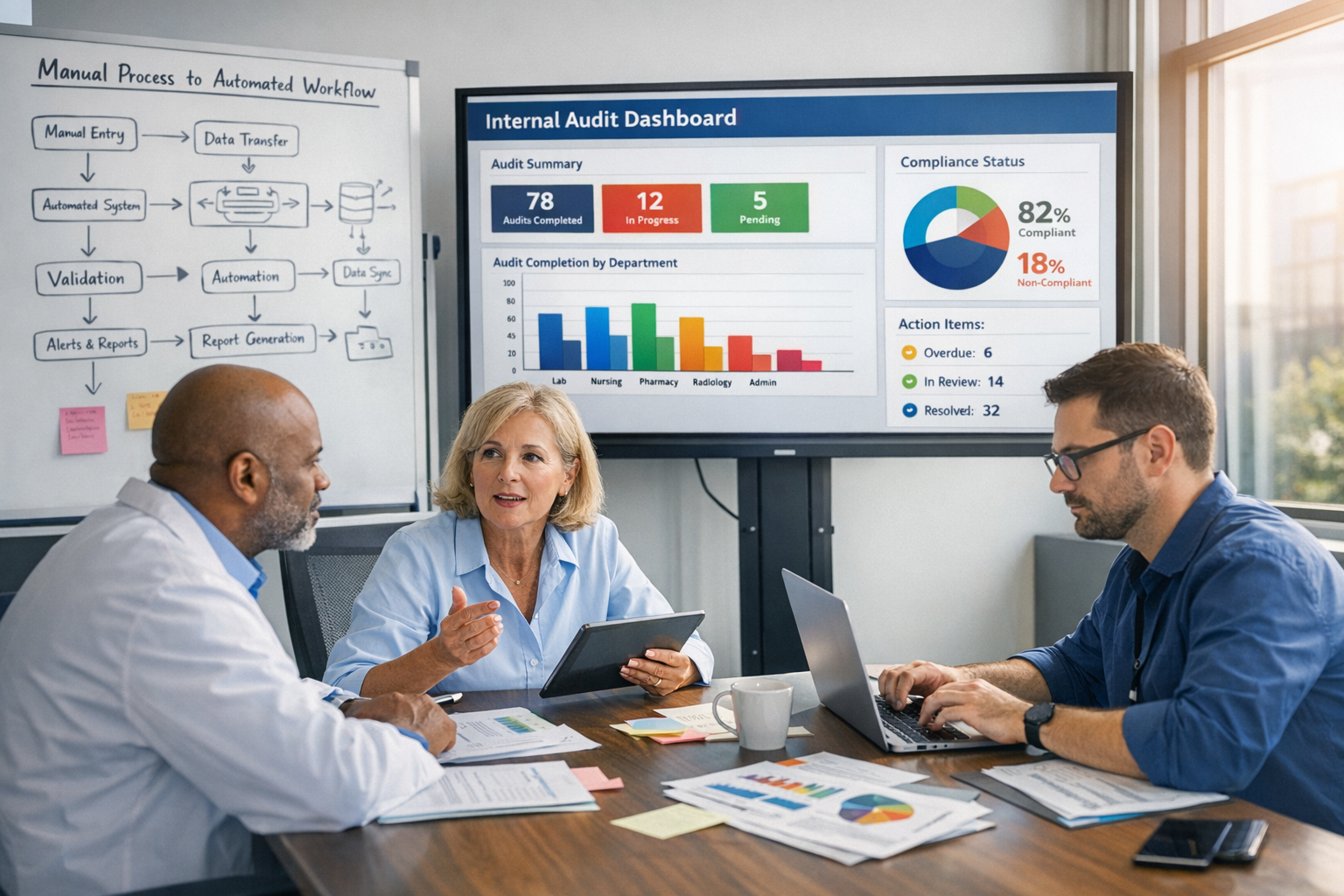
SOC 2 Evidence Collection: How to Automate Audit Prep
For many organizations pursuing SOC 2 compliance, the audit itself is not the biggest challenge. The real burden comes from collecting evidence.
Security teams, IT administrators, HR managers, and business leaders often spend weeks tracking down screenshots, policy documents, access reviews, training records, and system logs. By the time the audit begins, teams are already exhausted from the preparation process.
The good news is that most of this work can be automated. Organizations that modernize evidence collection can significantly reduce audit effort while improving accuracy and audit readiness. Businesses looking to streamline compliance operations can learn more at quantarra.
Why Evidence Collection Becomes a Bottleneck
SOC 2 audits require organizations to demonstrate that controls are operating effectively over a defined period.
This means auditors need proof. Not assumptions. Not verbal confirmations. Actual evidence showing that security, availability, confidentiality, processing integrity, or privacy controls were consistently followed.
The challenge is that evidence often lives across multiple systems. User access data may be stored in identity platforms. Security logs may exist in monitoring tools. HR records may be maintained elsewhere. Gathering everything manually creates delays and increases the risk of missing documentation.
The Hidden Costs of Manual Audit Preparation
Most organizations underestimate how much time is spent preparing for audits.
Teams frequently find themselves chasing evidence through email threads, shared drives, spreadsheets, and ticketing systems. Documentation becomes fragmented, ownership is unclear, and critical records are often collected only when auditors request them.
Common signs of a manual process include:
- Last-minute evidence requests before audits
- Multiple versions of the same document
- Screenshots being used as primary evidence
- Significant time spent coordinating across departments
As compliance requirements grow, these inefficiencies become increasingly difficult to manage.
What SOC 2 Evidence Automation Looks Like
Automating evidence collection does not mean removing people from the process. It means removing repetitive administrative tasks.
Instead of manually gathering information before an audit, organizations configure systems to continuously collect relevant records throughout the year. Evidence is stored centrally and linked directly to specific controls.
Examples include automated collection of user access reports, security training records, vulnerability scan results, policy acknowledgements, change management records, and system configuration data.
This approach transforms evidence collection from a periodic project into an ongoing operational process.
Continuous Readiness vs Audit Season
Traditional audit preparation follows a familiar pattern. Teams ignore compliance activities for months and then rush to assemble documentation when an audit approaches.
Organizations with mature compliance programs take a different approach.
They maintain evidence continuously, monitor controls throughout the year, and address issues as they occur. As a result, audit preparation becomes significantly easier because most of the required information is already available.
Benefits of continuous evidence management include:
- Reduced audit preparation time
- Better visibility into control performance
- Faster responses to auditor requests
- Improved compliance consistency across teams
This model aligns closely with modern compliance expectations and continuous assurance practices.
Why Automation Matters Beyond SOC 2
Evidence collected for SOC 2 often overlaps with requirements from other frameworks.
Organizations pursuing ISO 27001, CIS Controls, NIST CSF 2.0, privacy regulations, or industry-specific standards frequently need similar documentation and control validation.
A centralized evidence strategy reduces duplicate work and allows organizations to scale compliance efforts without increasing administrative overhead.
This becomes especially valuable as businesses expand into new markets or face additional regulatory requirements.
How Quantarra Simplifies SOC 2 Audit Preparation
Quantarra's Business Compliance Platform helps organizations eliminate manual evidence collection through automation and continuous monitoring.
With more than 300 integrations, Quantarra automatically gathers evidence from existing business systems, maps it to relevant controls, and maintains an immutable audit trail. AI-powered evidence verification further helps teams identify gaps before auditors do.
By replacing fragmented compliance processes with a unified compliance hub, organizations can reduce audit fatigue and maintain continuous readiness throughout the year.
A Better Approach to SOC 2 Compliance
SOC 2 audits should not require weeks of document chasing and last-minute preparation.
Organizations that automate evidence collection, centralize compliance activities, and monitor controls continuously can significantly reduce audit effort while improving confidence in their compliance posture.
Visit quantarra to learn how continuous compliance, automated evidence management, and real-time compliance visibility can simplify your SOC 2 journey.