CyFun for Government: Building Stronger Cybersecurity and Continuous Compliance
CyFun for Government: Building a Stronger Foundation for Public Sector Cybersecurity
Government organizations are responsible for some of the most sensitive and critical digital environments in society.
Citizen information. Healthcare records. Tax data. Education systems. Land records. Critical infrastructure. Public services.
As governments continue their digital transformation journeys, the volume of sensitive data and interconnected technology environments continues to grow.
This creates a fundamental challenge:
How can government organizations maintain strong cybersecurity while managing complex technology environments, limited resources, multiple stakeholders, and increasing regulatory expectations?
A structured cybersecurity framework can provide the foundation.
That is where CyFun for government becomes an increasingly relevant conversation.
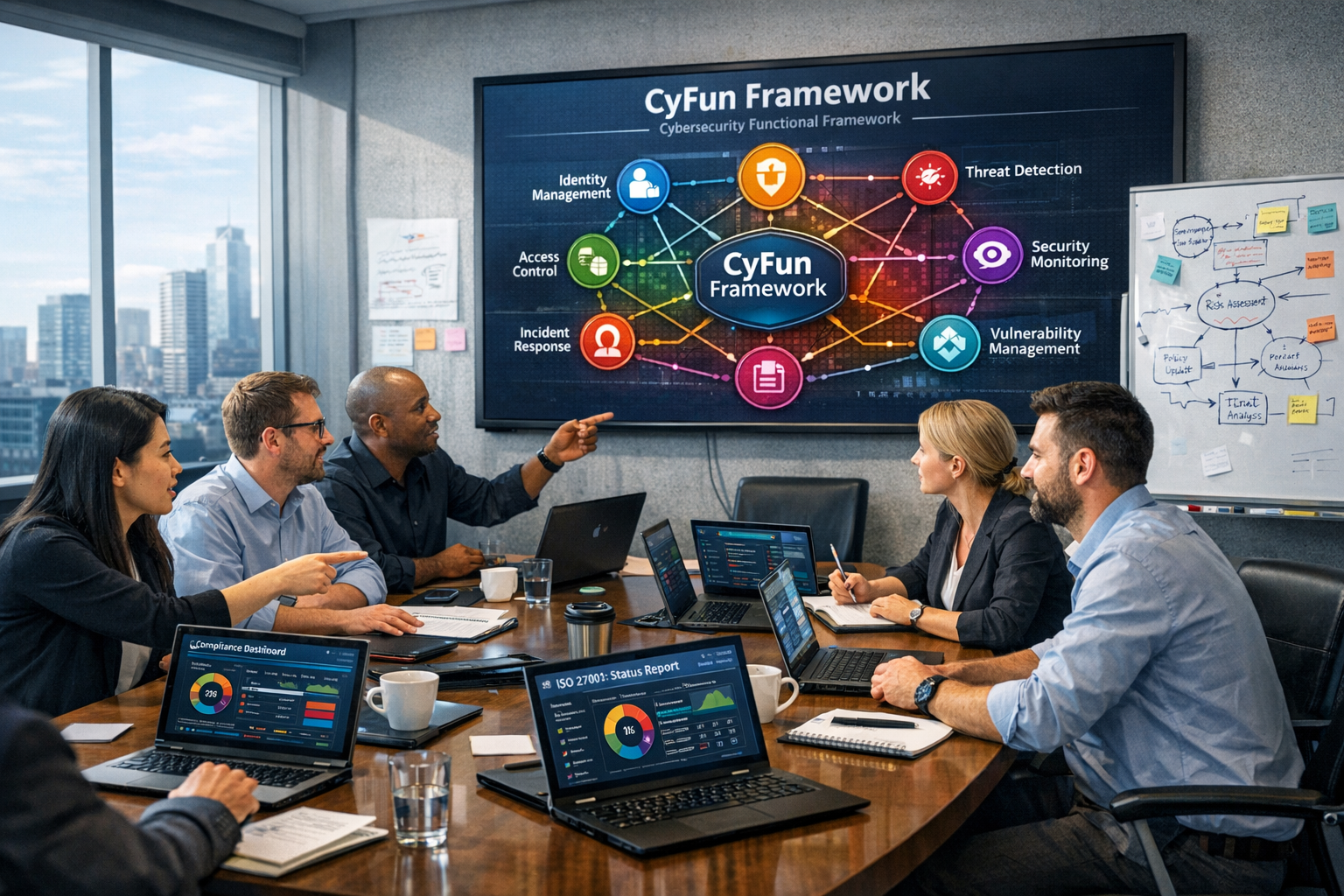
CyFun provides a structured, risk-based approach to organizing and assessing cybersecurity measures. In Ireland, the National Cyber Security Centre identifies CyFun as a preferred method for public administration entities to organize and evidence controls in support of NIS2-related cybersecurity requirements, while also clarifying that use of CyFun does not itself create a statutory presumption of compliance.
Why Government Cybersecurity Requires a Different Approach
Government cybersecurity is not simply an IT issue.
A security incident can affect:
- Essential public services
- Citizen trust
- National infrastructure
- Sensitive personal data
- Economic stability
- Emergency response
- Public safety
Government organizations also face operational complexity that many private organizations do not.
They often operate:
- Legacy technology environments
- Large and distributed IT estates
- Multiple agencies and departments
- Third-party technology providers
- Cloud and on-premise systems
- Citizen-facing digital services
- Critical infrastructure systems
Managing cybersecurity through disconnected spreadsheets and periodic assessments becomes increasingly difficult at this scale.
Public sector organizations need a cybersecurity operating model that provides:
Structure. Accountability. Visibility. Evidence. Continuous improvement.
What Is CyFun for Government?
CyFun provides a structured and risk-based approach to cybersecurity.
For government and public administration organizations, the framework can help create a common structure for organizing cybersecurity activities and demonstrating how controls are implemented.
In Ireland, the NCSC states that CyFun is a preferred method for public administration entities to demonstrate their cybersecurity measures in relation to NIS2 expectations.
This does not mean CyFun replaces legal or regulatory obligations.
Instead, it can provide a structured way to:
- Organize cybersecurity measures
- Assess cybersecurity maturity
- Structure controls
- Define evidence requirements
- Improve accountability
- Support risk management
- Build a repeatable cybersecurity program
The Public Sector Challenge: Compliance Is Often Fragmented
A typical government organization may have different teams responsible for:
- Information security
- IT operations
- Risk management
- Internal audit
- Privacy
- Procurement
- Digital transformation
- Critical infrastructure
- Third-party management
Each team may manage information in different systems.
As a result, cybersecurity evidence can become fragmented.
A single assessment may require teams to search through:
- Spreadsheets
- Shared drives
- Policy documents
- Ticketing systems
- Cloud platforms
- Security tools
- Email threads
- Audit repositories
This creates significant operational overhead.
The challenge is not always the absence of cybersecurity controls.
Often, the challenge is:
Knowing whether controls are operating, who owns them, and where the evidence is located.
How CyFun Can Support Government Cybersecurity
1. A Structured Approach to Cyber Risk
Government organizations often manage thousands of technology assets and services.
A structured cybersecurity framework helps create a common language for discussing cyber risk across departments and leadership teams.
Instead of asking:
"Are we secure?"
Organizations can ask more practical questions:
- Which cybersecurity measures are implemented?
- Which controls have owners?
- Where are the gaps?
- What evidence supports implementation?
- Which risks require remediation?
- How is progress being monitored?
This creates a more measurable cybersecurity program.
2. Stronger Cybersecurity Governance
Cybersecurity requires more than technical controls.
Government leadership needs visibility into:
- Cyber risk
- Accountability
- Policy compliance
- Major control gaps
- Remediation progress
- Security maturity
The newer CyFun framework introduces Governance Measures that support a stronger focus on organizational and leadership-level cybersecurity oversight.
For government organizations, governance can help establish clearer responsibilities across:
- Executive leadership
- Department heads
- Security teams
- Technology teams
- Risk owners
- Internal audit teams
3. Better Evidence for Audits and Assessments
Public sector organizations frequently undergo:
- Internal audits
- External audits
- Regulatory assessments
- Security reviews
- Supplier assessments
One of the most time-consuming activities is evidence collection.
Teams may spend weeks gathering:
- Screenshots
- Configuration records
- Logs
- Policies
- Reports
- Access reviews
- Risk assessments
A more modern approach focuses on maintaining evidence continuously.
Instead of asking teams to collect everything immediately before an audit, organizations can establish processes that keep evidence organized throughout the year.
4. Improved Cross-Department Coordination
Government cybersecurity requires collaboration.
A compliance program cannot operate effectively if:
- Security works independently
- IT manages systems separately
- Risk maintains separate registers
- Audit works from another repository
- Leadership receives outdated reports
A centralized compliance operating model can help bring these functions together.
Teams can work from a common view of:
- Controls
- Risks
- Evidence
- Tasks
- Findings
- Remediation activities
CyFun and NIS2 for Public Administration
The relationship between CyFun and public sector cybersecurity is particularly relevant in Europe.
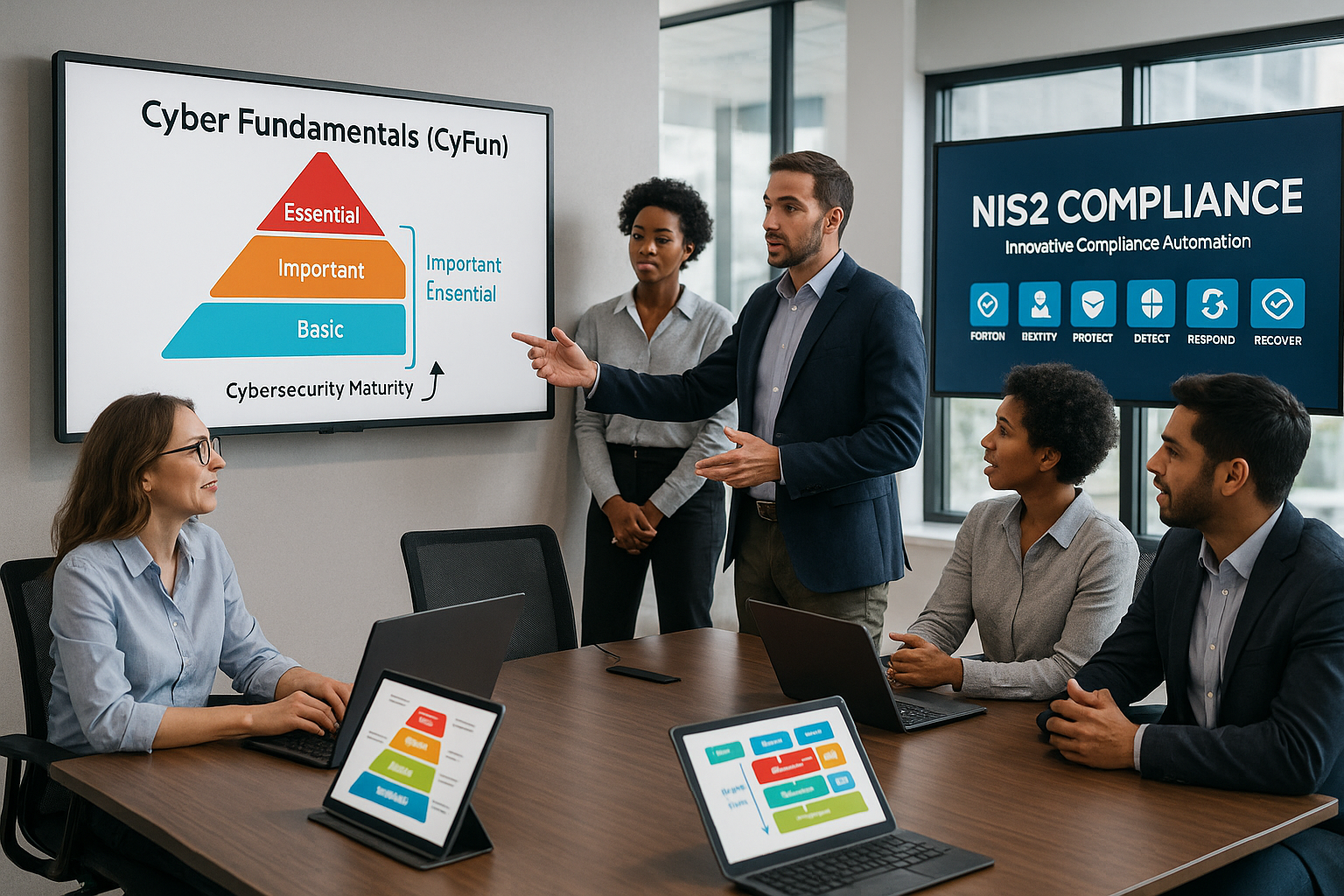
The NCSC in Ireland notes that CyFun is a recognized structured tool for helping entities organize and evidence security measures, while emphasizing that certification or self-assessment does not itself determine legal compliance with NIS2.
This distinction is important.
Framework compliance should not be treated as a checkbox exercise.
Government organizations should focus on building operational cybersecurity capabilities that can:
- Identify risks
- Protect critical services
- Detect security issues
- Respond to incidents
- Recover from disruption
- Govern cybersecurity activities
The evolution of CyFun toward alignment with NIST CSF 2.0 supports a stronger governance-oriented approach to cybersecurity risk management.
The Importance of Continuous Compliance in Government
Traditional compliance follows a familiar pattern:
- An audit approaches
- Teams request evidence
- Departments search for documentation
- Spreadsheets are updated
- Gaps are identified
- Remediation begins
- The cycle repeats
This approach creates a problem.
The organization's compliance posture may only be clearly understood during an assessment.
But government technology environments change continuously.
Cloud configurations change. Users change. Vendors change. Applications are updated. New systems are introduced.
Cybersecurity controls can drift.
That is why government organizations increasingly need to move toward continuous compliance.
Continuous compliance means creating ongoing visibility into:
- Control status
- Evidence availability
- Risk changes
- Open findings
- Remediation progress
- Compliance gaps
The goal is not to eliminate human oversight.
The goal is to eliminate unnecessary manual effort.
Building a CyFun Program for Government: A Practical Approach
Step 1: Establish Governance and Ownership
Start by identifying who owns:
- Cybersecurity strategy
- Individual controls
- Cyber risks
- Policies
- Evidence
- Remediation
Every critical cybersecurity activity should have clear accountability.
Step 2: Create a Centralized Control Library
Government organizations should avoid maintaining separate versions of controls across multiple departments.
A centralized control library helps standardize:
- Control descriptions
- Ownership
- Evidence requirements
- Review schedules
- Associated risks
- Framework mappings
Step 3: Map CyFun to Existing Requirements
Most government organizations do not operate under only one framework.
They may also manage requirements related to:
- Privacy
- Information security
- National cybersecurity policies
- Internal controls
- Third-party security
- Sector-specific regulations
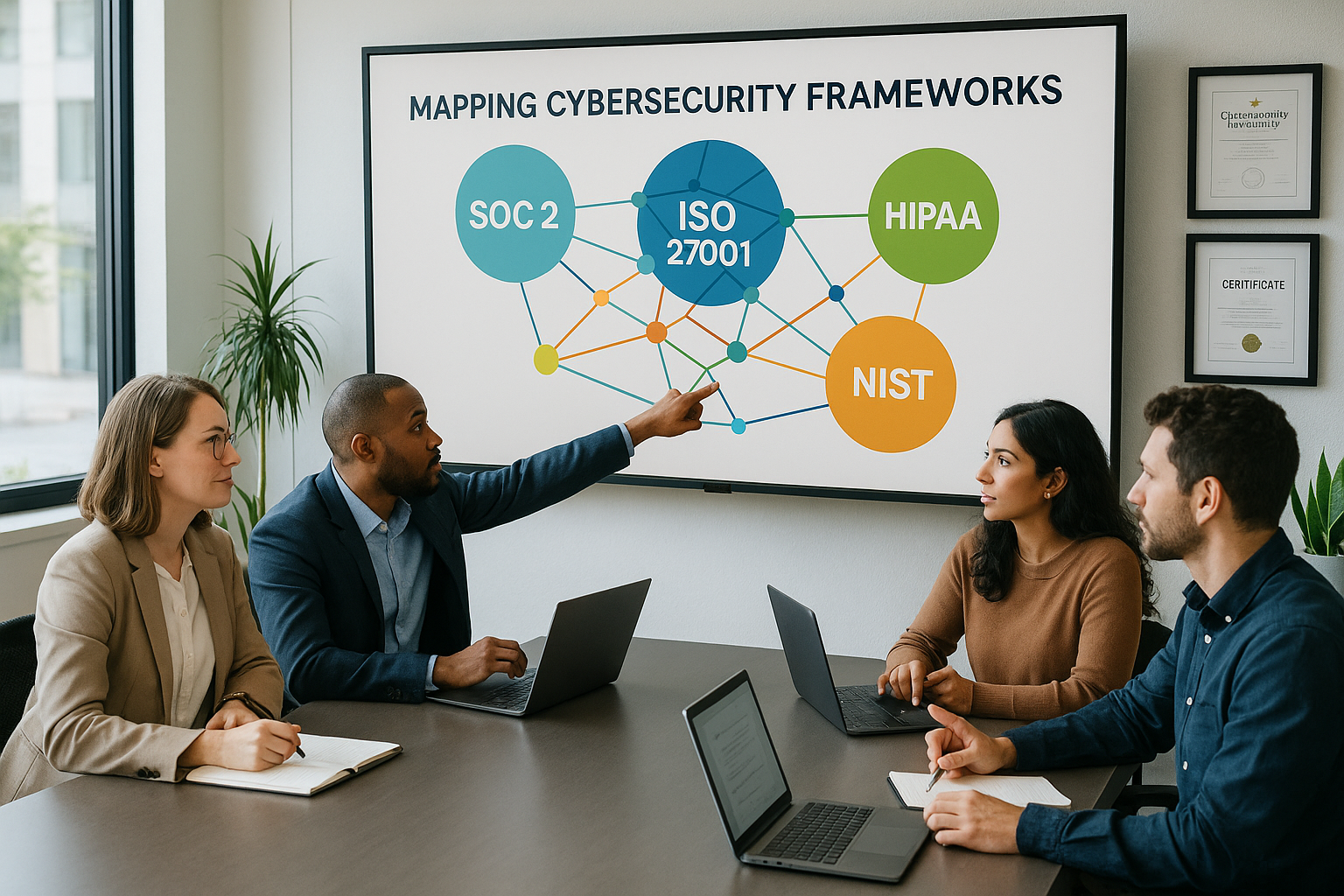
Control mapping can reduce duplicate work by identifying common activities that satisfy multiple requirements.
Step 4: Automate Evidence Collection
Where possible, evidence should be collected from the systems where activities already take place.
For example:
- Cloud environments
- Identity platforms
- Security tools
- Ticketing systems
- Asset management platforms
Automation can reduce the need for teams to repeatedly download and upload evidence manually.
Step 5: Monitor Controls Continuously
Government cybersecurity programs should not depend entirely on annual or periodic assessments.
Continuous monitoring can provide earlier visibility into:
- Control failures
- Configuration changes
- Missing evidence
- Overdue activities
- Open remediation items
Step 6: Provide Leadership Visibility
Executives and government leaders need clear answers.
Not hundreds of technical logs.
Dashboards should help answer:
- What is our current risk posture?
- Which areas need attention?
- What are the highest-priority gaps?
- Are remediation activities progressing?
- Are critical controls operating?
How Quantarra Supports CyFun for Government
Government organizations need cybersecurity and compliance platforms capable of supporting complex, distributed operations.
Quantarra helps organizations build a more connected approach to compliance through:
Centralized Compliance Management
Bring controls, policies, risks, evidence, audits, and workflows together in one platform.
Cross-Framework Control Mapping
Map controls across multiple cybersecurity and compliance frameworks to reduce duplication.
Automated Evidence Collection
Reduce manual evidence gathering by connecting compliance processes with existing technology environments.
Continuous Compliance Monitoring
Maintain greater visibility into control status and potential compliance gaps.
Risk and Remediation Management
Track risks, findings, corrective actions, and remediation progress.
Executive and Audit Reporting
Provide stakeholders with clearer visibility while maintaining organized evidence for audit and assessment activities.
For government organizations, this can help transform compliance from a periodic administrative exercise into an ongoing cybersecurity assurance capability.
Benefits of CyFun for Government Organizations
A well-implemented CyFun program can help government organizations work toward:
Stronger Cybersecurity Governance
Clearer accountability and improved leadership visibility.
More Consistent Controls
A structured approach across departments and technology environments.
Better Audit Readiness
Evidence and documentation are maintained in a more organized manner.
Reduced Manual Work
Automation can reduce repetitive evidence and workflow activities.
Improved Risk Visibility
Teams can identify and manage cybersecurity gaps more proactively.
Greater Resilience
Cybersecurity becomes an ongoing operational capability rather than a periodic assessment exercise.
Frequently Asked Questions About CyFun for Government
Q. Is CyFun designed for government organizations?
CyFun is a structured, risk-based cybersecurity framework that can support organizations across sectors. In Ireland, the NCSC identifies it as a preferred method for public administration entities to organize and evidence cybersecurity measures in support of NIS2-related obligations.
Q. Does CyFun automatically guarantee NIS2 compliance?
No. The Irish NCSC explicitly notes that CyFun is a recognized way to organize and evidence controls but does not itself create a statutory presumption of compliance; the relevant competent authority determines compliance under applicable law.
Q. Why is continuous compliance important for government?
Government technology environments change continuously. Continuous compliance helps organizations maintain greater visibility into controls, evidence, risks, and remediation rather than relying only on periodic assessments.
Q. Can CyFun be mapped to other cybersecurity frameworks?
Organizations can use control mapping approaches to identify common requirements and reduce duplicate work across multiple cybersecurity and compliance programs.
Conclusion: From Government Compliance to Continuous Cyber Assurance
Government organizations face a cybersecurity challenge that cannot be solved with spreadsheets and annual assessments alone.
As public services become increasingly digital, cybersecurity must become:
Continuous. Visible. Governed. Evidence-driven.
CyFun can provide a structured foundation for organizing cybersecurity measures and improving cyber risk management.
But a framework is only the starting point.
The real challenge is operationalizing it across complex technology environments, multiple departments, changing risks, and ongoing audit requirements.
By combining a structured framework with centralized controls, automated evidence collection, cross-framework mapping, and continuous monitoring, government organizations can move toward a more resilient model of cybersecurity assurance.
Build a More Continuous Approach to Government Cybersecurity
Quantarra helps organizations centralize compliance, automate evidence collection, monitor controls, and build continuous cybersecurity assurance programs at scale.
Explore how Quantarra can support your CyFun compliance journey.